

 See My Latest Article on HelloNation
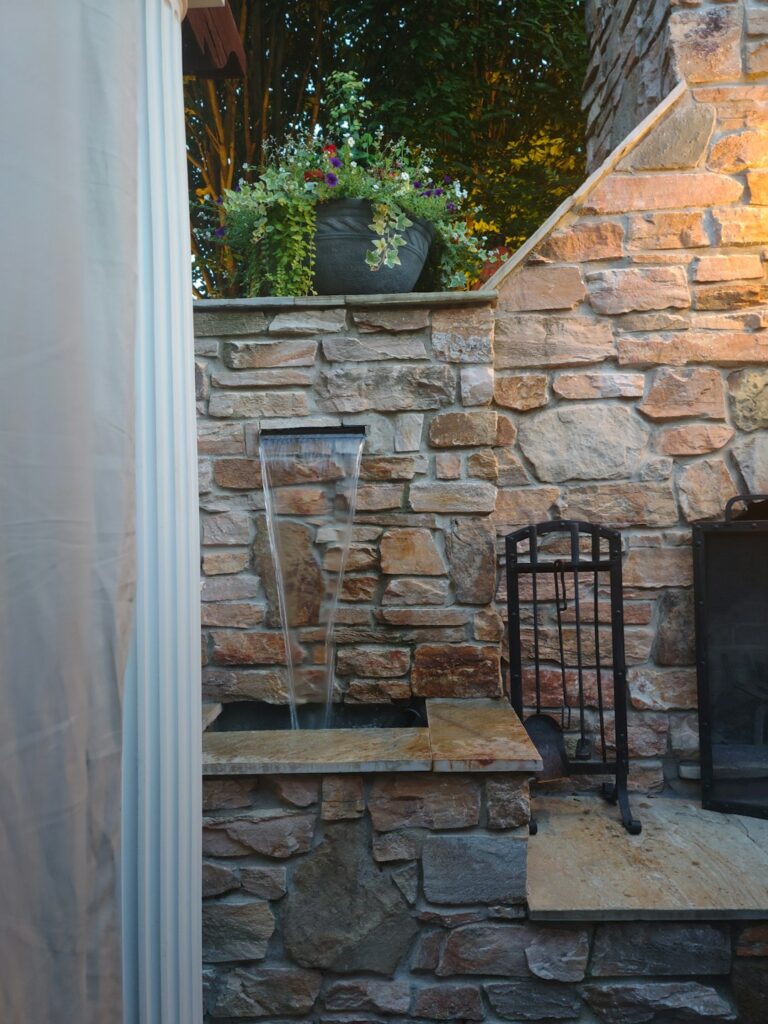
Water features can add movement, sound, wildlife value, and visual interest to an outdoor space without requiring a large yard. In Columbia, SC, the most successful designs account for hot summers, periodic heavy rain, leaf debris, mosquitoes, and the practical demands of keeping water clean.
What types of water features work well in residential yards?
The most suitable water feature depends on available space, maintenance preferences, safety needs, and the overall purpose of the outdoor area. Common options include:
- Bubbling urns or fountains: Compact choices that fit patios, courtyards, and small garden areas. Water recirculates through a hidden basin or reservoir.
- Wall fountains: Useful near seating areas or along privacy walls. Their vertical design can provide sound and visual focus without taking up much floor space.
- Ponds: Appropriate for larger landscapes and homeowners who want aquatic plants, fish, or a more natural appearance.
- Stream beds: These can create a longer visual line through a garden, although they usually require more grading and circulation equipment.
- Rain gardens: Shallow planted areas that temporarily collect and absorb rainwater. They are not decorative fountains, but they can function as attractive water-focused landscape features.
- Reflecting basins: Still-water features that emphasize shape, sky, and surrounding plants rather than sound or movement.
A small recirculating feature is often easier to maintain than a pond because it has less water volume, fewer biological variables, and a smaller footprint.
How should a water feature be placed?
Placement affects appearance, comfort, maintenance, and safety. A water feature should be visible from commonly used areas, such as a patio, porch, kitchen window, or garden path. Sound also matters. Moving water may help soften traffic or mechanical noise, but a feature placed too close to a dining area can become distracting if the pump or splash is loud.
Consider these practical placement questions:
- Will the feature receive enough light for surrounding plants without becoming excessively hot?
- Can fallen leaves be removed easily?
- Is the ground level and stable?
- Could water splash onto walls, furniture, walkways, or electrical equipment?
- Will children or pets be able to reach deep water?
- Is there a nearby, code-compliant electrical source for the pump?
In hot climates, partial shade can help reduce evaporation and algae growth. However, dense shade from trees can increase leaf buildup and make the feature harder to keep clear. The best location usually balances shade, visibility, access, and drainage.
What should homeowners consider about Columbia’s climate?
Columbia’s long, hot summers can increase evaporation and water temperatures. A shallow feature may need frequent refilling during dry weather, particularly if it receives afternoon sun or has a high splash rate. Wind can also carry water beyond the basin, gradually lowering the water level and leaving mineral deposits on nearby surfaces.
Heavy rain creates a different set of concerns. Stormwater can wash soil, mulch, fertilizer, and organic debris into a pond or basin. If the feature is located at the bottom of a sloped yard without proper control, runoff may overwhelm the system or make the water cloudy.
Good planning includes:
- Keeping the basin away from areas where roof runoff flows directly toward it.
- Using stable edging to prevent soil from entering the water.
- Allowing overflow to move safely away from foundations and walking surfaces.
- Choosing plants that tolerate heat and periodic moisture.
- Checking water levels after extended hot or rainy periods.
A water feature should complement the yard’s drainage plan rather than become an unintended collection point for runoff.
How can water stay clear and healthy?
Clear water depends on circulation, filtration, sunlight, organic debris, and nutrient levels. A pump that is too small may leave stagnant areas, while excessive circulation can create splash, noise, and unnecessary evaporation.
For a basic recirculating feature, maintenance commonly includes:
- Removing leaves, twigs, and insects before they decompose.
- Cleaning the pump intake and filter as recommended by the equipment instructions.
- Checking water levels so the pump does not run dry.
- Scrubbing mineral deposits or algae from hard surfaces.
- Trimming nearby vegetation that drops excessive debris into the basin.
- Watching for unpleasant odors, persistent cloudiness, or unusually rapid algae growth.
Algae is more likely when water is warm, still, and rich in nutrients. Overfertilizing nearby plants, allowing leaves to accumulate, and placing a feature in intense sunlight can all contribute. Adding more chemicals is not always the best solution, especially where children, pets, birds, or beneficial insects may come into contact with the water.
Are water features a mosquito problem?

A properly circulating water feature is generally less attractive to mosquitoes than stagnant water, but circulation alone does not eliminate every risk. Shallow corners, clogged filters, hidden reservoirs, and containers near the main feature can still hold standing water.
To reduce mosquito habitat:
- Keep pumps operating consistently when conditions require circulation.
- Remove debris that blocks water movement.
- Empty small containers, saucers, and decorative items that collect rain.
- Avoid designs with isolated pockets that cannot drain or circulate.
- Inspect the area after storms and during extended warm weather.
Ponds with fish and aquatic plants require more careful ecological management. Fish should not be added simply as a mosquito-control measure without considering water volume, filtration, temperature, and seasonal care.
What safety features should be included?
Safety should be considered before selecting the style or location. Deep ponds and open basins present different risks from sealed bubbling features, but even shallow water can create slip hazards.
Helpful safety measures include:
- Using textured, slip-resistant surfaces around splash zones.
- Keeping cords protected and electrical connections suitable for outdoor use.
- Installing ground-fault protection where required.
- Avoiding sharp stones, exposed edges, and unstable stepping surfaces.
- Using barriers or safer placement around deeper water.
- Designing for visibility from the home and primary seating areas.
- Making sure pets cannot become trapped in steep-sided basins.
Electrical work near water deserves particular care. Local building and electrical requirements may apply, especially when a new outdoor circuit, buried wiring, lighting, or structural basin is involved. Hazardous or uncertain conditions should not be handled casually.
Can a water feature support plants and wildlife?
Yes, but the feature should be designed for the desired type of life. Native and well-adapted plants can provide texture and shade, while shallow edges may offer drinking access for birds and insects. Dense vegetation, however, can make cleaning difficult and may trap leaves.
Avoid treating every water feature as a miniature natural pond. A sealed ornamental basin has different needs from a planted pond with fish. Introducing animals or plants without understanding their growth, water-quality, and seasonal requirements can create maintenance problems.
A balanced design might combine a recirculating basin with nearby flowering plants, shade-tolerant foliage, and a shallow, stable area where wildlife can approach without falling into deep water.
How much maintenance should be expected?
Even a low-maintenance water feature requires regular attention. Small fountains may need quick checks several times a week during hot weather, while larger ponds require monitoring of pumps, filters, water clarity, plant growth, and sediment.
Before installation, consider whether the feature can be reached with a hose, whether the pump can be removed easily, and whether replacement components are accessible. A simple design that receives consistent care usually performs better than a complex feature that is difficult to clean.
The most dependable choice is one sized for the yard, positioned away from uncontrolled runoff, protected from excessive debris, and designed around the household’s willingness to maintain it.